

Today we’re going to run an agent platform made of:Documentation Index
Fetch the complete documentation index at: https://agno-v2-ab-home-page-updates-5-16.mintlify.app/llms.txt
Use this file to discover all available pages before exploring further.
- AgentOS on FastAPI
- Postgres + PgVector
Prerequisites
- Docker Desktop installed and running
- An OpenAI API key for models and embeddings
Run your agent platform
Start the platform
Verify it's running
Open http://localhost:8000/docs.You’ll see the OpenAPI spec. You can build incredibly powerful products on top of this.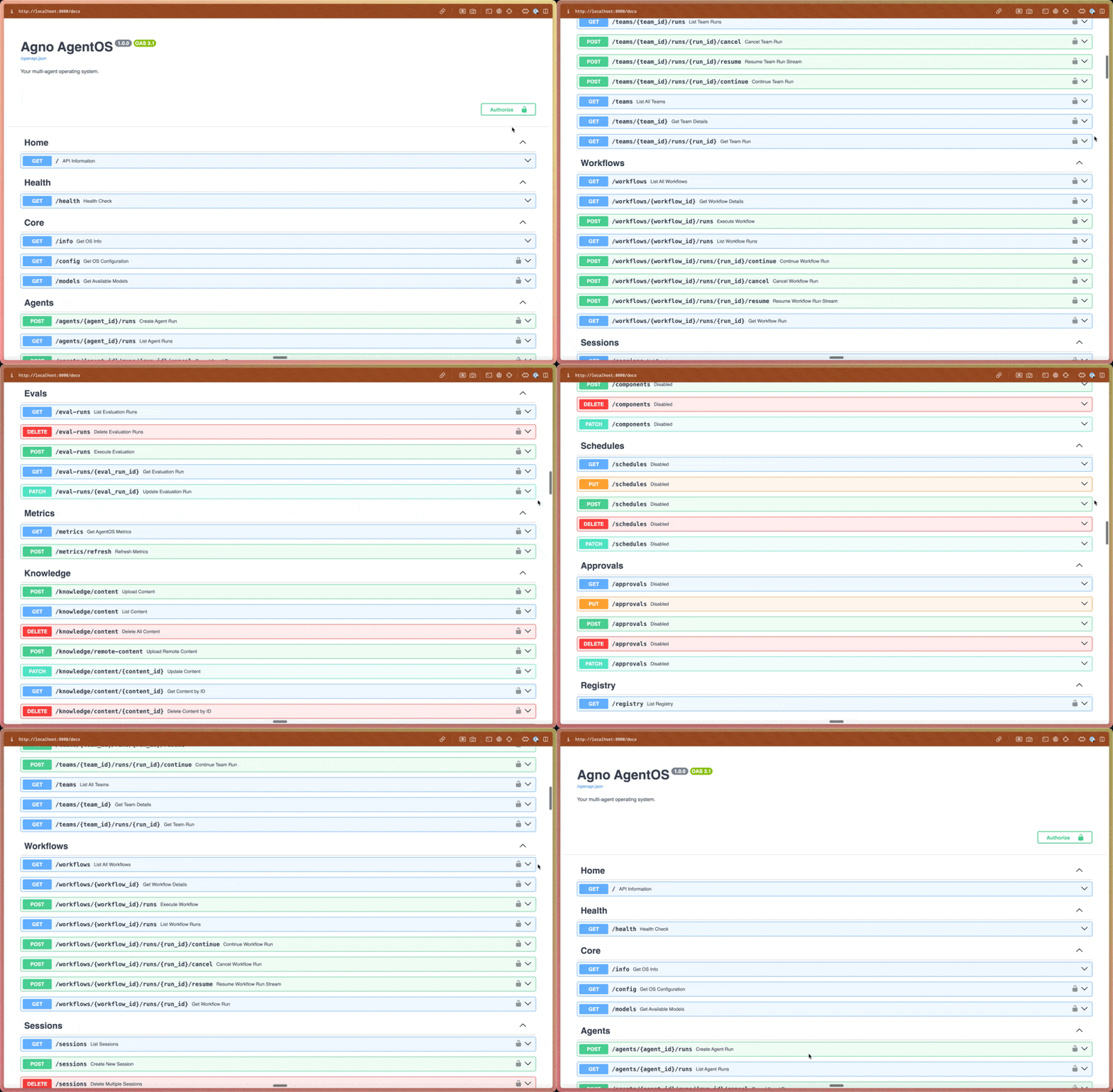
Connect the AgentOS UI
- Open os.agno.com and log in.
- Click Connect OS, choose Local, enter
http://localhost:8000as the URL, and name it Local AgentOS. - Click Connect.
| Agent | Pattern | What it does |
|---|---|---|
| code_search | Context provider | Reads files in the workspace and answers questions about the codebase. |
| web_search | Direct tools | Searches the web and synthesizes answers grounded in citations. |
“What’s in this repo?” → code_search lists the directory and explains the structure.
“What did Anthropic publish about agents recently?” → web_search returns a summary.
Open Sessions and Traces in the sidebar. Every run is captured with full message history, tool calls, and timing. This is what powers the iteration loop on the next page.
Summary
We now have a locally running agent platform with:- Our agent runtime (AgentOS) running on port 8000 with request isolation, session management, scheduling, and 50+ endpoints.
- A Postgres database for storing sessions, memory, knowledge, and traces.
- A
docs/folder of Claude Code prompts for managing the entire agent development lifecycle: create, improve, extend, eval, and review.